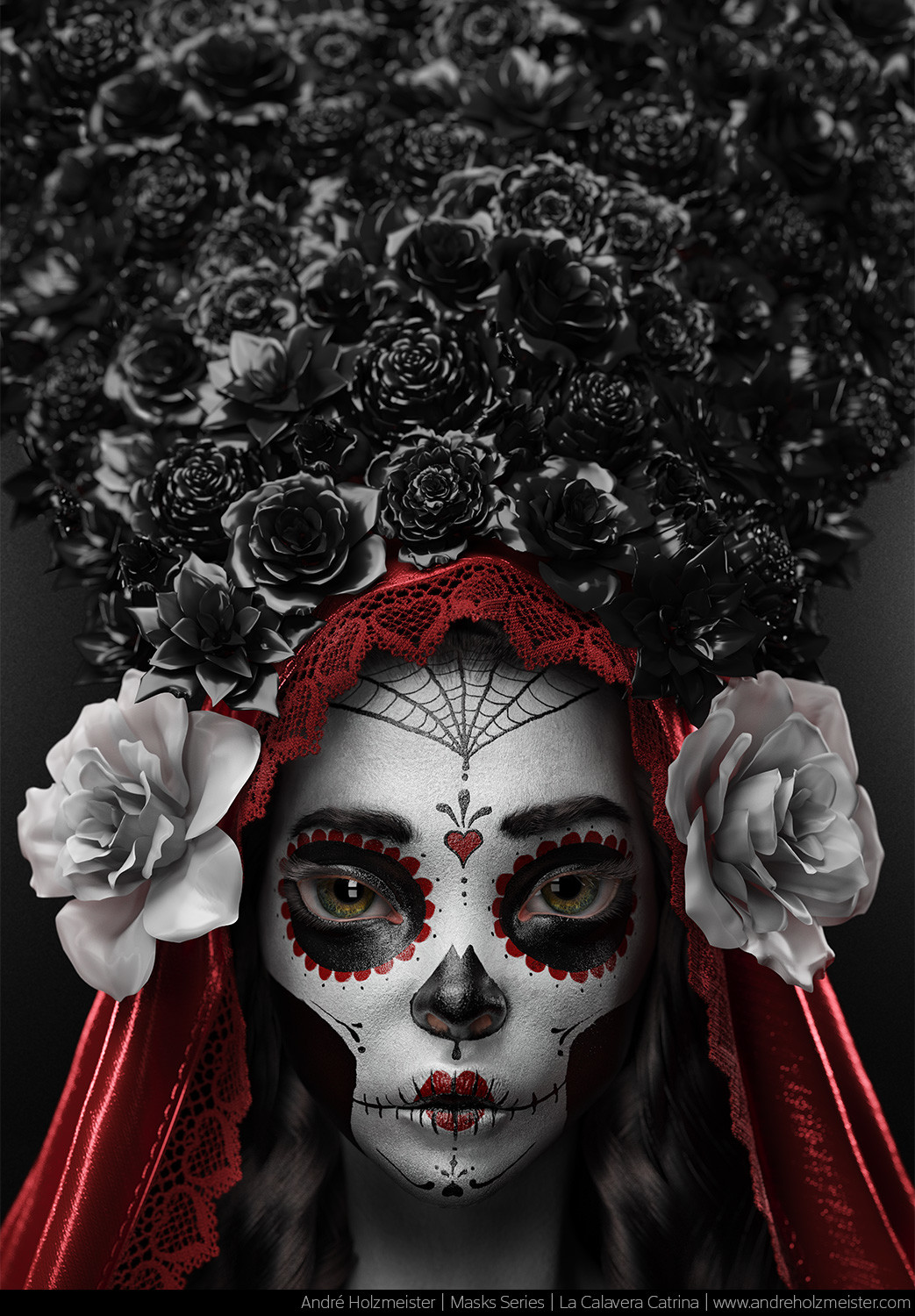
La Calavera Catrina | Mask Series
Originally called La Calavera Garbancera, the etching was created sometime between 1910 and 1913 by José Guadalupe Posada as a broadside, and was published from the original plates in 1930 by Frances Toor, Blas Vanegas Arroyo and Pablo O'Higgiafia: Las Obras de José Guadalupe Posada, Grabador Mexicano. Calavera (Dapper Skeleton).[1] This image can be found on plate 21 of Posada's Popular Mexican Prints.
The image made from zinc etching captures the famous calaveras or skull/skeleton image that had become popular at the turn of the 20th century. The original leaflet describes a person who was ashamed of his/her indigenous origins and dressed imitating the French style while wearing lots of makeup to make his/her skin look whiter.[2] This description also ties to the original name garbancera, which became a nickname given to people of indigenous ancestry who imitated European style and denied their own cultural heritage.